Wood or metal. It's the first real decision once you've settled on actually fitting a gate, and most people pick on looks alone. Fair enough. The gate is the first thing anyone sees of your house. But the choice runs deeper than the photo you saved off Pinterest. It changes how the gate weathers, what you'll be doing to it on a Sunday in March, what it costs you over ten years rather than ten minutes, and whether it'll behave once you bolt a motor to it.
We've drawn, built and hung well over a thousand of these. Hardwood gates, heavy steel estate gates, low-maintenance aluminium, the lot. So here's an honest run through both, including the option most people don't know exists until we mention it on site.
Looks: which suits your house
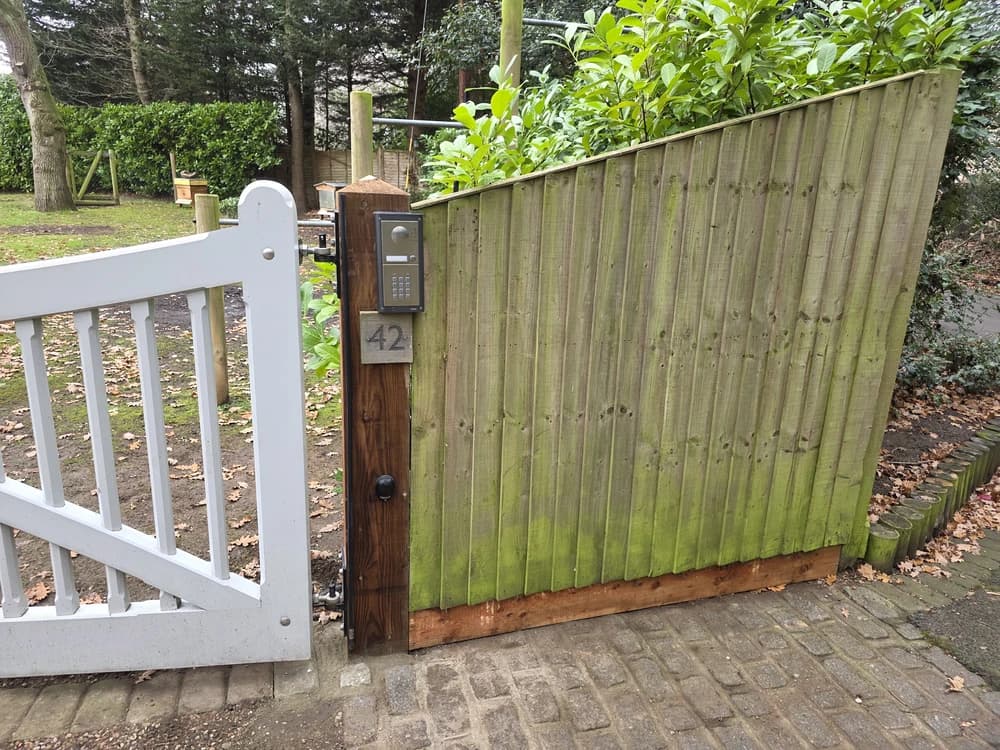
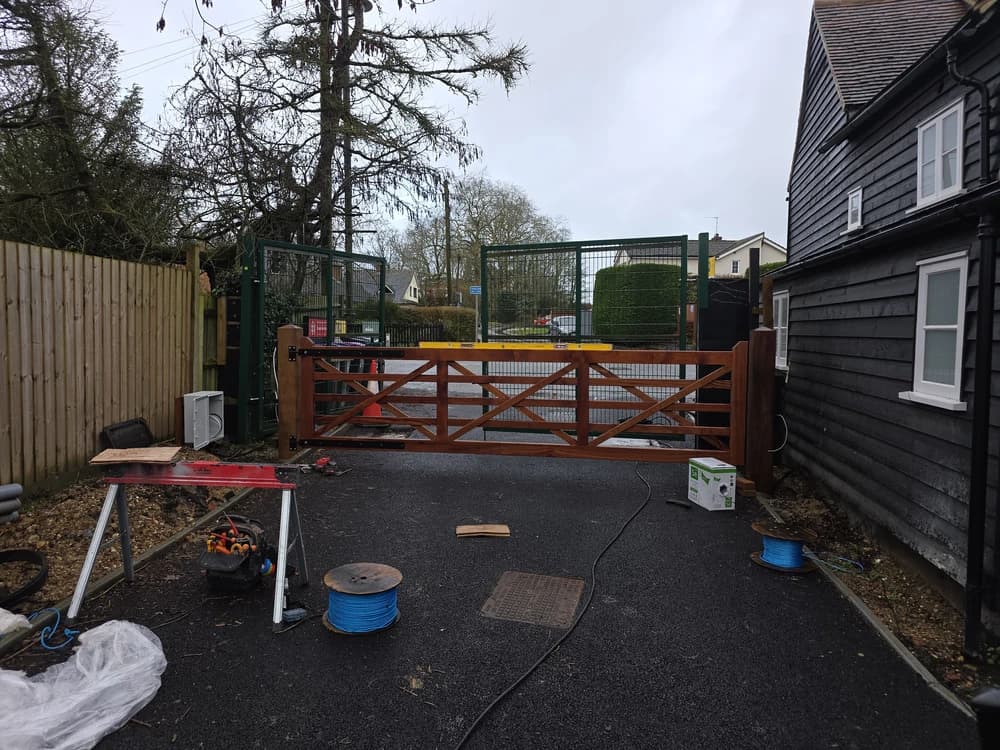
Start with the building, not the gate. A timber five-bar or a planed iroko gate sits right in front of a period cottage, a converted barn, anything brick and old. Wood has a warmth that metal can't fake. Oak greys off over the years to a soft silver if you let it, and on the right house that's gorgeous. Cedar reads lighter and a bit more contemporary if you want it to.
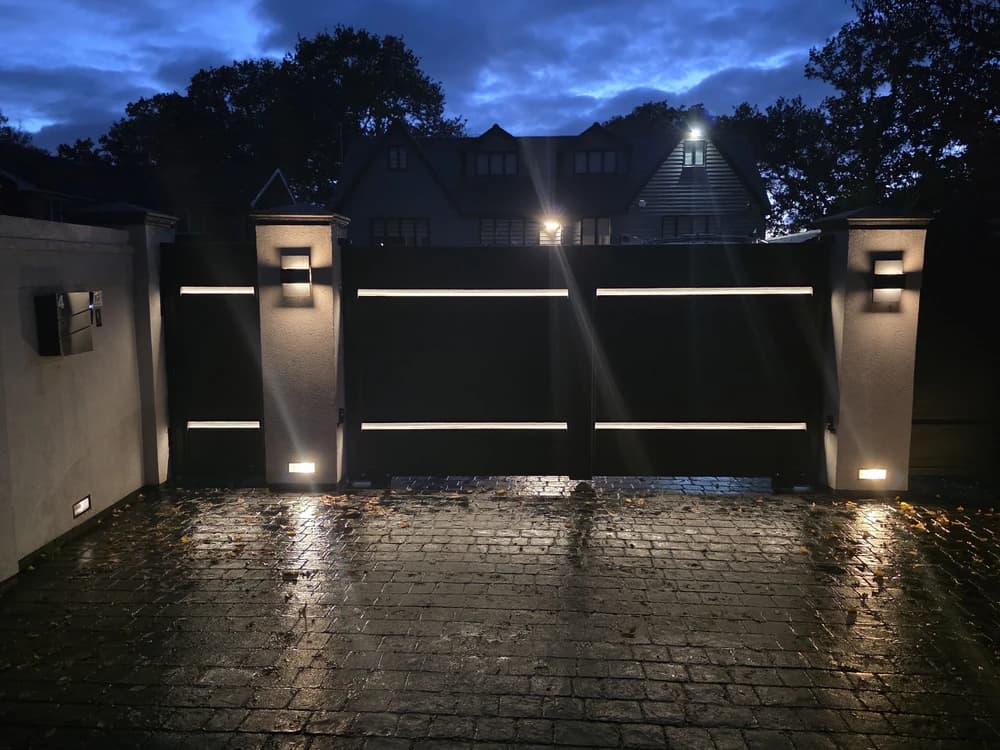
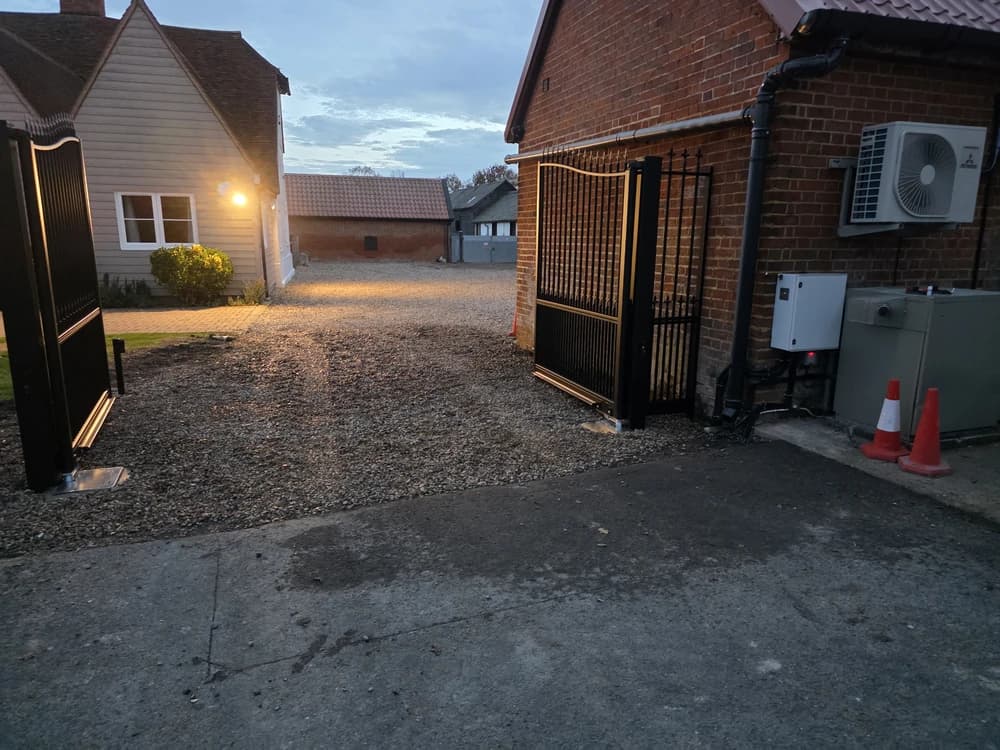
Metal pulls the other way. A flat-bar steel gate in matt black, clean horizontal lines, no fuss, looks made for a rendered modern build or a sharp new-build estate. Aluminium goes even further that way: lighter, crisper, powder-coated in any colour, the sort of thing that suits a contemporary house where you want a clean line and no upkeep.
So the question isn't really which looks better. It's which looks right next to your front door. We've talked people out of a sleek contemporary steel gate because their 1700s farmhouse would have looked like it was wearing trainers with a suit.
How they hold up in British weather
This is where the romance meets the rain. And we get a lot of rain.
Timber moves. It's a natural material, so it swells when it's wet and shrinks when it's dry, year after year. A well-made hardwood gate with proper joinery copes with that for decades, but it's working against the weather the whole time. Softwood gates, the cheaper ones you'll see at builders' merchants, don't last. They rot at the bottom rail where water sits and the fixings let go. We've taken plenty of them off.
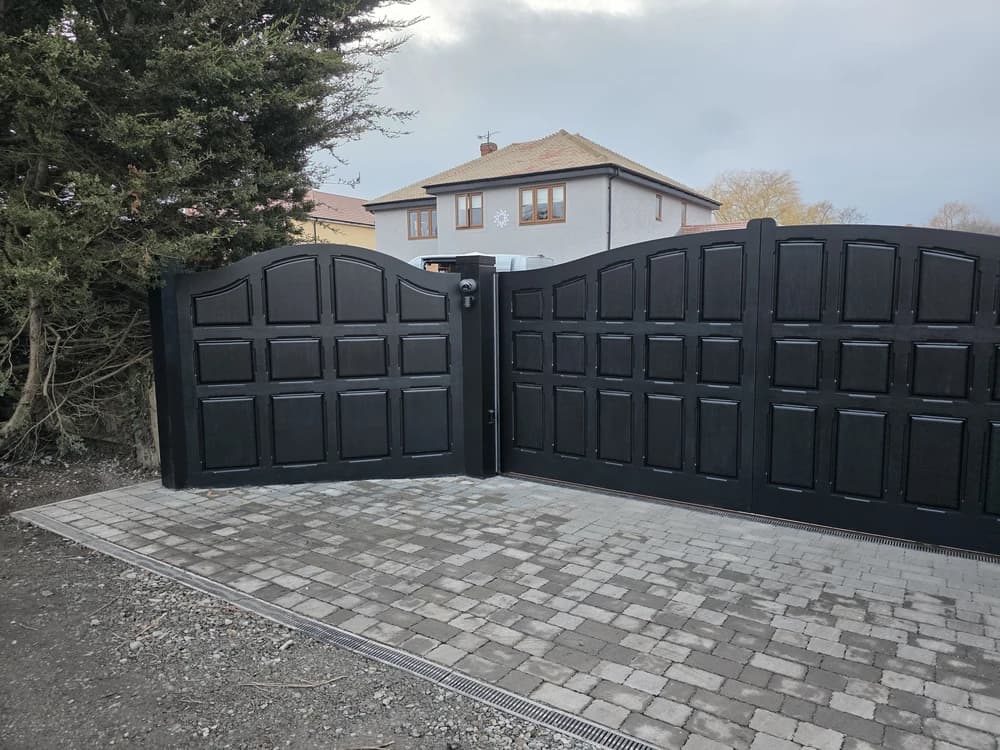
Steel doesn't move with the seasons. Bare steel rusts though, no argument, so the answer is in how it's protected. Every steel gate we make is hot-dip galvanised first, dipped in molten zinc so the coating bonds right through the surface, then powder coated in your chosen RAL colour on top. Done properly that's a 20 to 25 year finish before it needs anything serious. Aluminium sidesteps rust altogether, it simply doesn't corrode the way steel does, so a powder-coated aluminium gate holds its finish for years with almost nothing asked of it. The real enemy is a gate that's only been painted, because the first chip lets water under the paint and the rust spreads from there unseen.
- Hardwood (iroko, oak, cedar): lasts decades if it's well made and looked after, but it never stops moving with the seasons.
- Softwood: cheap, and it shows. Rot at the lower rail within a handful of years.
- Galvanised and powder coated steel: doesn't move, won't rust through, 20 plus years before it wants real attention.
- Aluminium: won't rust, light, powder-coated for a clean low-maintenance finish, though softer and less secure than steel.
The maintenance you'll actually be doing
Nobody enjoys this bit, so let's be straight about it.
A hardwood gate needs re-oiling. How often depends on how exposed it is and whether you want to hold the colour or let it grey off. Somewhere between once a year and once every couple of years for an oiled finish: a light sand, then a couple of coats of a decent exterior oil like Osmo. It's a morning's work, not a nightmare. But it's a morning that comes round again and again, and if you skip it for too long the surface goes grey and tired and the wood starts to check.
Steel and aluminium want far less. A galvanised, powder coated gate is wipe it down when it's dirty and that's your lot for years. Catch a knock on a steel gate that goes through to bare metal and you touch it in before it can rust, but that's the exception, not the routine. So the trade is clear enough. Timber asks for a little of your time, regularly. Metal mostly asks to be left alone.
Cost over time, not just day one
Day one, a good hardwood gate and a good steel gate land in roughly the same place. People are often surprised by that. The price gap shows up later.
Run the numbers over ten years. The timber gate needs oiling, call it every 18 months, in materials and your time or a decorator's day rate. The steel gate needs more or less nothing in that window. So the metal gate that looked level on day one quietly comes out cheaper across its life, and it's still got a decade left in it after that.
Don't buy purely on the spreadsheet though. If a timber gate is the gate that makes your house look like itself, the upkeep is a fair price for that. Just go in knowing the job's coming, rather than finding out three years later when the finish has gone. And whatever you do, don't buy the cheapest softwood gate going to save a few hundred quid. You'll be replacing it before the steel one's even due its first proper look. That's not a saving. It's a problem you've put off.
Weight, automation and the hybrid most people miss
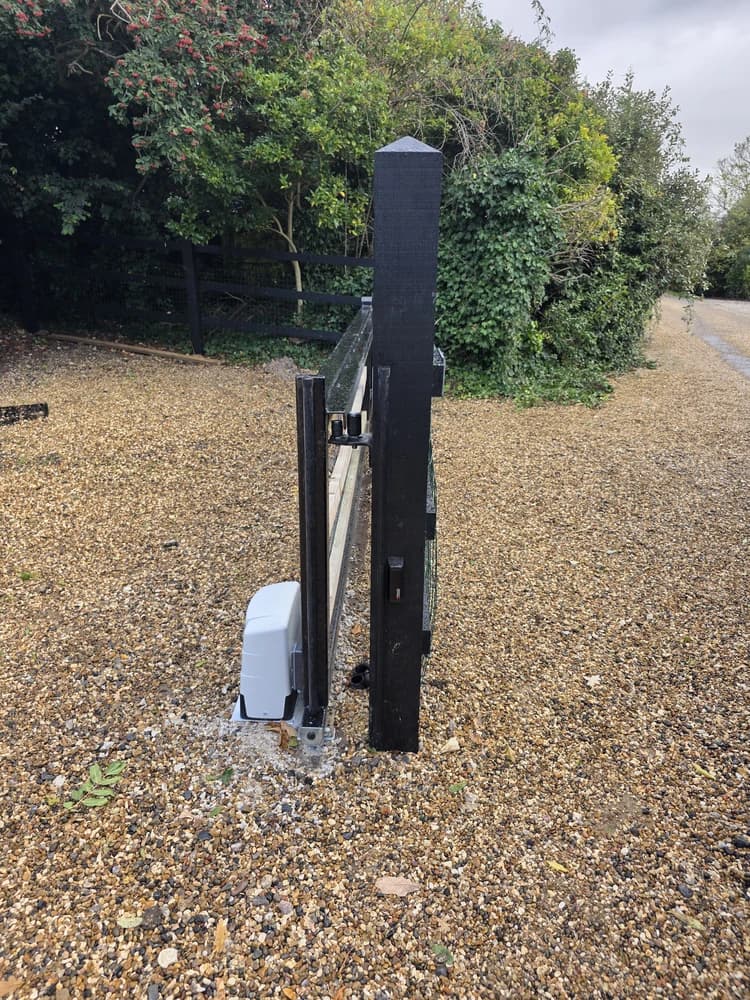
If you want the gate automated, and most driveway gates we fit now are, weight matters more than people expect. A motor has to swing or slide that gate thousands of times a year, and a solid timber leaf on a 4m opening is heavy. It wants a stronger motor, deeper foundations and good bracing, and it'll work the gear harder over time. Steel can be just as heavy if it's a full infill, but we can control the weight in the design. We pick the automation to suit the gate, Roger Technology or SEA depending on the job, and every automated gate we hang is force-tested to BS EN 12453 so it stops safely if it meets a car, a wheelie bin or a child.
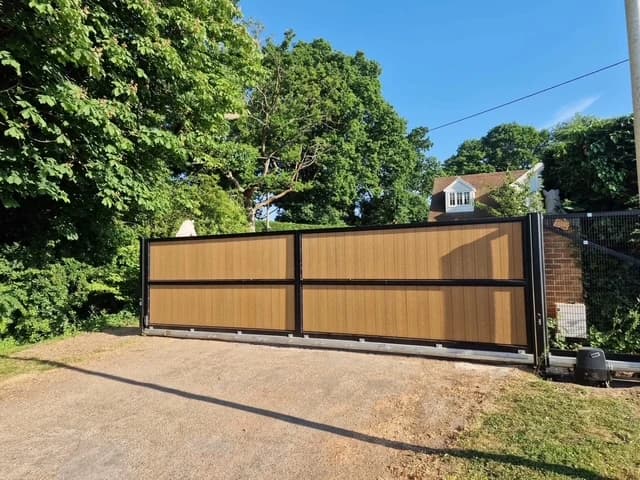
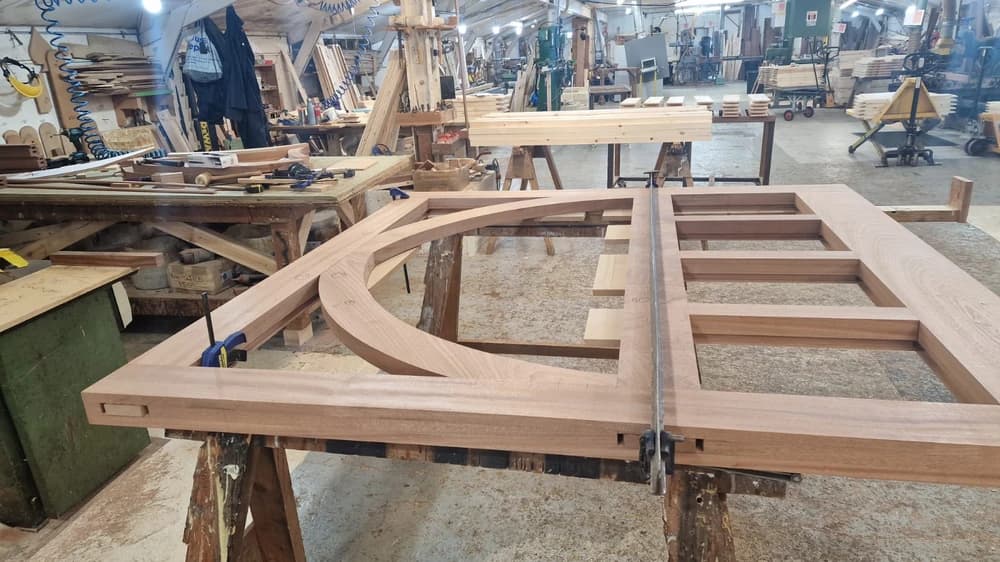
Here's the option a lot of people don't know about until we're standing on their drive. You don't have to choose. We build a galvanised steel frame, the structure and the hinge points and everything the motor pulls against, then clad it in hardwood. Iroko, oak or cedar boards on the face. From the road it's a timber gate, all the warmth and the grain. Underneath it's steel that won't sag, won't drop on its hinges and gives the motor a proper frame to work against.
You still oil the timber cladding. But the bit carrying the structural load and the automation is steel, doing what steel does best. For a wide automated opening where you want the timber look, it's usually the right answer, and it's what we'd point most people towards. Best of both, and we mean that literally rather than as a slogan.
- Match the material to the building first. Timber suits period and rural, clean steel suits contemporary, aluminium suits modern and low-maintenance.
- Galvanised and powder coated steel won't rust through for 20 plus years. Hardwood lasts decades if it's well made, but never stops moving with the weather.
- Avoid cheap softwood gates. They rot at the bottom rail within a few years and you'll replace them early.
- Budget for re-oiling hardwood every 12 to 18 months. Metal mostly just wants leaving alone.
- For wide automated gates, a galvanised steel frame clad in hardwood gives you the timber look with the strength and weight control a motor needs.